 On October 6, 2015 the Federal Aviation Administration (FAA) issued an enforcement letter to SkyPan International, Inc. assessing a $1.9 million dollar civil penalty for flying unmanned aerial vehicles (UAVs) without permission. The FAA has fined drone operators for unlawful flights in the past, but this is by far the largest civil penalty to date. This should be a reminder to unauthorized drone pilots that flying commercial UAVs is still illegal and carries great risk in the United States.
Showing posts with label Privacy. Show all posts
Showing posts with label Privacy. Show all posts
Tuesday, October 6, 2015
FAA Issues $1.9 Million Fine to Drone Operator
On October 6, 2015 the Federal Aviation Administration (FAA) issued an enforcement letter to SkyPan International, Inc. assessing a $1.9 million dollar civil penalty for flying unmanned aerial vehicles (UAVs) without permission. The FAA has fined drone operators for unlawful flights in the past, but this is by far the largest civil penalty to date. This should be a reminder to unauthorized drone pilots that flying commercial UAVs is still illegal and carries great risk in the United States.

Sunday, August 30, 2015
Farm Data in Custom Farming Contracts

Thursday, August 27, 2015
Is Your "E-Signature" Valid?
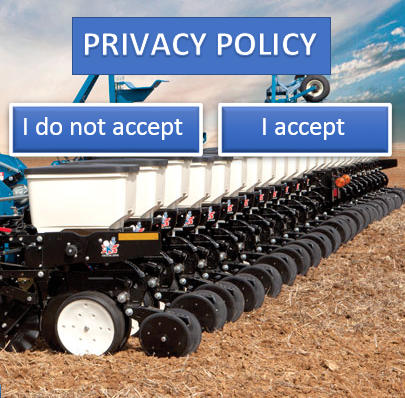
 The prevalence of "I accept” check boxes on online contracts may have some people wondering whether one click of the mouse is as effective as signing your John Hancock? The answer, for the most part, is yes. “E-signatures” can be just as binding as real signatures. But like all legal matters, the validity of e-signatures is not always black and white.
 Monday, August 10, 2015
My Top Ten Farm Data Articles
 I've been writing about the legal issues surrounding farm data for a few years now. Quite simply, farm data is the most exciting subject I've encountered in more than a dozen years practicing law. A farmer's ability to collect, share, and analyze data has tremendous potential to improve farming in next decade. As a farm kid turned-lawyer, I see my role in agriculture's big data revolution to push farmers to think about legal issues they may not have considered, and to push ag technology providers to rethink traditional legal frameworks that apply to data in other industries. Farming is different. That's why I keep writing.
Wednesday, July 22, 2015
Big Data and Technology in Ag Seminar August 14, 2015
 Please join me for the Big Data and Technology in Agriculture seminar on August 14, 2015 at Indiana Farm Bureau. The day promises to have a number of engaging speakers who will cover different aspects of farm data technology, privacy and security. I'll be speaking about the legal aspects of managing farm data as well as efforts to ensure transparency with ag technology providers. More information can be found by clicking "Continue Reading" below or going to www.InAgLaw.org/bigdata.
 Thursday, June 18, 2015
Is Your Farm Data a Trade Secret?
 Every agricultural technology provider likes to say that
“the farmer owns the data,” but is that really true? This statement hinges on the answer to a
central question: is farm data a form of intellectual property that the law
protects? Farm data doesn’t neatly fit
into the legal box designed to hold patents, copyrights, or trademarks. That leaves the law of trade secrets. If farm data is a protected form of intellectual
property, it must be a form of trade secret.
Every agricultural technology provider likes to say that
“the farmer owns the data,” but is that really true? This statement hinges on the answer to a
central question: is farm data a form of intellectual property that the law
protects? Farm data doesn’t neatly fit
into the legal box designed to hold patents, copyrights, or trademarks. That leaves the law of trade secrets. If farm data is a protected form of intellectual
property, it must be a form of trade secret.Sunday, May 10, 2015
What Makes Agronomic Farm Data Different from Other Forms of Intellectual Property?

Friday, May 1, 2015
Farm Machinery, Copyright, and the Right to Tinker
 It may not be enumerated in the Bill of Rights, but the
Right to Tinker with farm machinery is well embedded in America’s rural culture. I grew up a first-hand witness to farm
tinkering. I still remember when my dad
and Uncle Herman thought it would be a good idea to “marry” a header from a
John Deere chopper onto a Farmhand silage cutter. Farmhand made a good harvester, but a lousy
header. With some farm-engineering and a
lot of welding, a new Farmhand/Deere silage cutter was created. The machine
wasn't perfect, but it cut a lot of silage. It was the epitome of tinkering.
It may not be enumerated in the Bill of Rights, but the
Right to Tinker with farm machinery is well embedded in America’s rural culture. I grew up a first-hand witness to farm
tinkering. I still remember when my dad
and Uncle Herman thought it would be a good idea to “marry” a header from a
John Deere chopper onto a Farmhand silage cutter. Farmhand made a good harvester, but a lousy
header. With some farm-engineering and a
lot of welding, a new Farmhand/Deere silage cutter was created. The machine
wasn't perfect, but it cut a lot of silage. It was the epitome of tinkering.Saturday, April 25, 2015
John Deere Does Not Own Your Tractor.

WIRED magazine’s recent headline: “We can’t let
John Deere destroy the very idea of ownership,” really got my attention. The article’s
premise is based upon John Deere’s recent comment
to the US Copyright Office that farmers who buy a new John Deere tractor are
granted an implied license to operate a tractor for the duration of its life. Or as WIRED puts it: “It’s John Deere’s tractor, folks. You’re just driving
it.” I decided to dig a little deeper.
Thursday, April 9, 2015
Co-op and Custom Applicators: Are You Addressing Farm Data in Your Contracts?
 Farmers will call up their local co-ops this year to help them fertilize and spray their fields. These sprayers-for-hire will be recording what they do, but what happens to that data after that point? Does the co-op have an obligation to provide that data to the farmer? Does the co-op own the data generated on a farmer’s field? These questions need to be answered when farmers engage third parties to perform precision ag activities on their fields.
Thursday, March 12, 2015
Don't Forget the Little Guy: FAA's Proposed Rules for "Micro" UAVs
 Many articles have been written about the Federal Aviation Administration's (FAA) proposed rules for "small" unmanned aircraft systems ("small UAS" or "small UAVs"). But most authors have overlooked that the FAA is also considering special, less stringent rules for "micro" UAVs. Micro UAVs weigh less than 4.4 lbs (small drones are less than 55 lbs.) and travel less than 35 mph (small drones are restricted to 100 mph). This article takes a closer look at the FAA's proposal for micro-UAVs and its promise for agriculture.
Thursday, March 5, 2015
Ten Key Points to the FAA's Proposed Small UAV Rule
 The Federal Aviation Administration (“FAA”) has released proposed rules that would govern the integration of “small” unmanned aircraft systems (“small UAS”) into the National Airspace System. The proposed rules specifically state that they would allow crop monitoring and inspection, aerial photography, and research and development—meaning commercial agricultural uses fall squarely within the new rule. Here is my summary of the proposed rule, followed by some suggestions to current and future drone operators.
Thursday, February 12, 2015
Defining "Big Data" in Agriculture

Friday, February 6, 2015
Big Data in Farm Leases: When Landlord and Tenant Both Want the Data
 In my last two posts, I discussed what provisions one might add to a farm lease when either the landlord or the tenant wants ownership of farm data generated during the lease. Another scenario arises when the landlord and tenant both want equal access to the farm data. In this situation, the lease should establish co-ownership rights. As a side note, I should mention that data analytic tools on the market at this time, like FARMserver, make this sharing of data between landlords and tenants extremely easy.
Monday, February 2, 2015
Big Data in Farm Leases: When the Landlord Wants Control

In my previous post, I discussed some ideas for drafting a lease to make sure that the tenant owns the farm data created during the lease. Another scenario arises when the landlord wants control of the farm data generated by the tenant. This might be the case where the landlord makes land management decisions, such as what to plant, how much fertilizer to apply, when to spray pesticides, etc. In this type of situation, different provisions need to be included in the lease than suggested in my previous post.
Saturday, January 31, 2015
Does Your Lease Address Big Data?
 I've drafted and reviewed dozens of farmland leases over the years, but I've yet to see a lease that addresses the issues associated with ownership and transfer of farm data. As farmers embrace new data storage and analytic tools, it’s time to modernize the traditional farm lease to address farm data. This post begins a series of articles on how to address farm data ownership, privacy, and sharing, in a farm lease.
Thursday, January 8, 2015
FAA Approves Ag Drone Flights for One Company: Is Decision a Road Map for Others?

Wednesday, December 17, 2014
The Year in Reverse: A Look Back at 2014

Thursday, December 11, 2014
Big Data and Drones at the IN/IL Farm Show
 I'm presenting this year again at the Indiana/Illinois Farm Show at the Indiana State Fairgrounds. Each year, Hoosier Ag Today hosts a series of seminars on different topics for attendees. I'll be on stage on December 16, 2014 at 11:00 am. My presentation is called: "Data Privacy on the Farm: What You Need to Know." I'll talk about recent data privacy developments and drone news. I'll be joined by Jim Shertzer and Jim Love from Beck's Hybrids, which recently launched its own data analytic tool: FARMserver. More information can be found here: IN/IL Farm Show Seminars. I hope to see you there!
If you missed my presentation, you can find it here: Data Privacy on the Farm: What You Need to Know.
Saturday, December 6, 2014
Questions to Ask About Your Data Privacy Policy
Subscribe to:
Posts (Atom)